
Description:
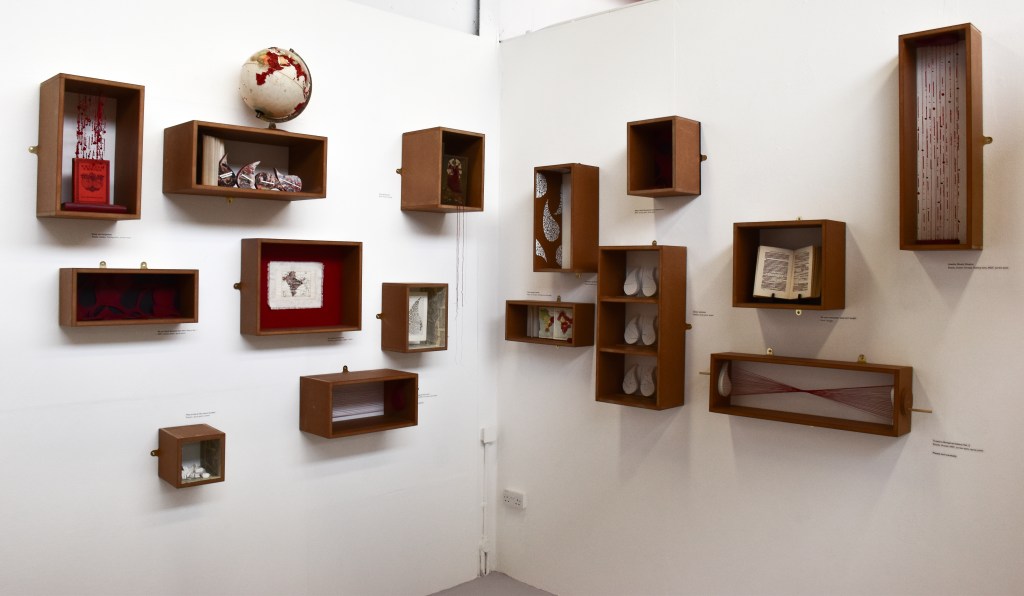
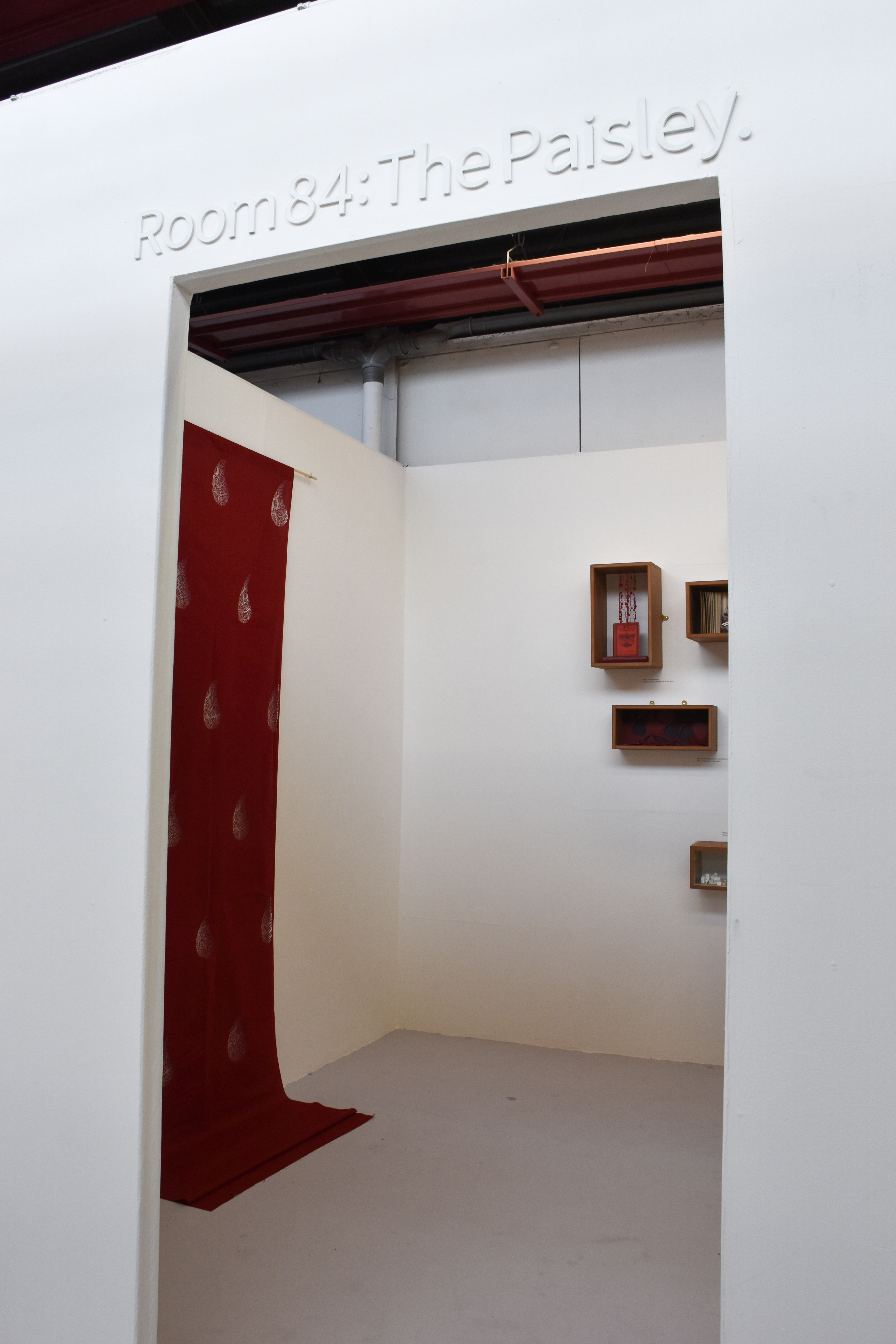
Room 84: The Paisley (cabinet collection), 2023
15 boxes varying in sizes
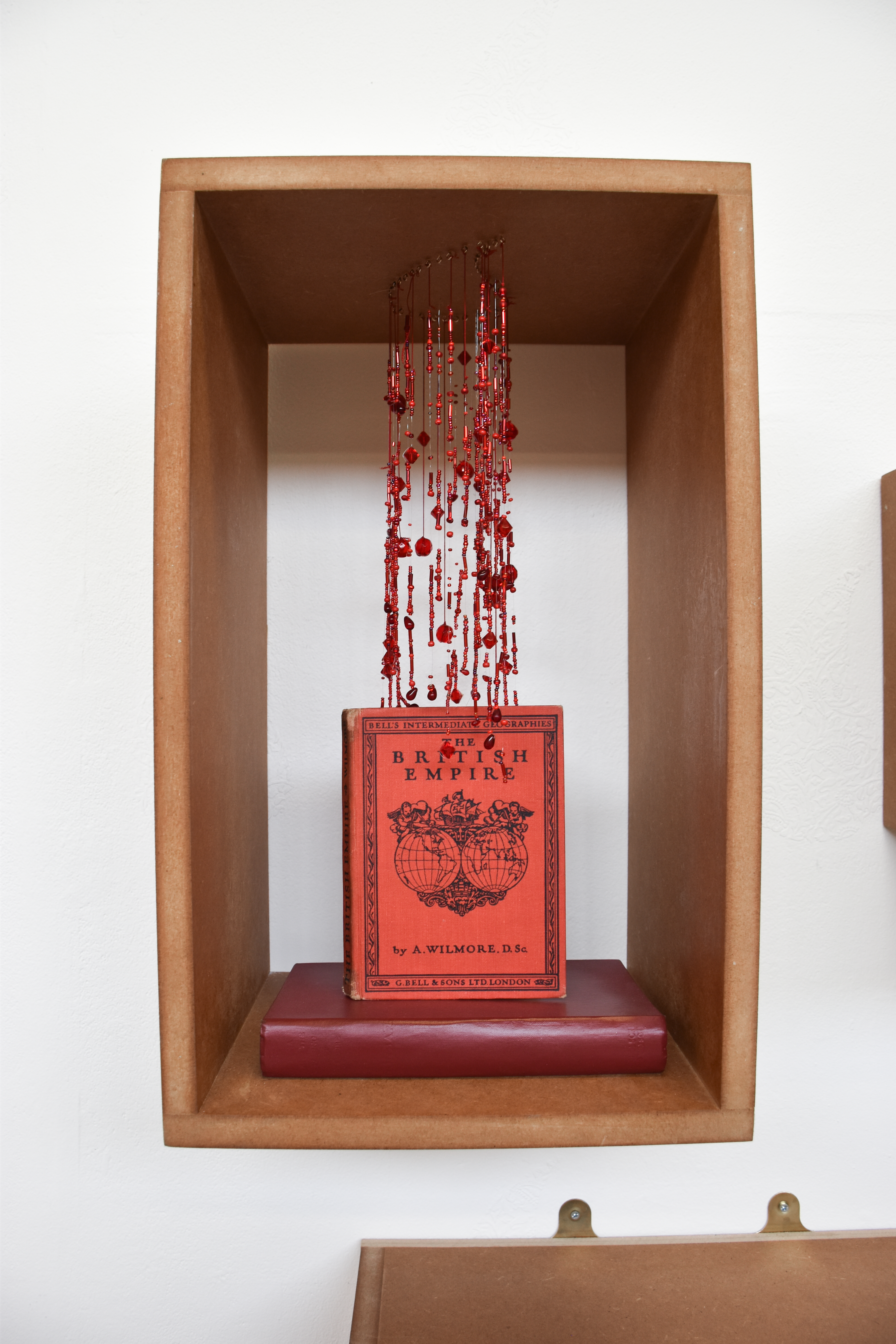
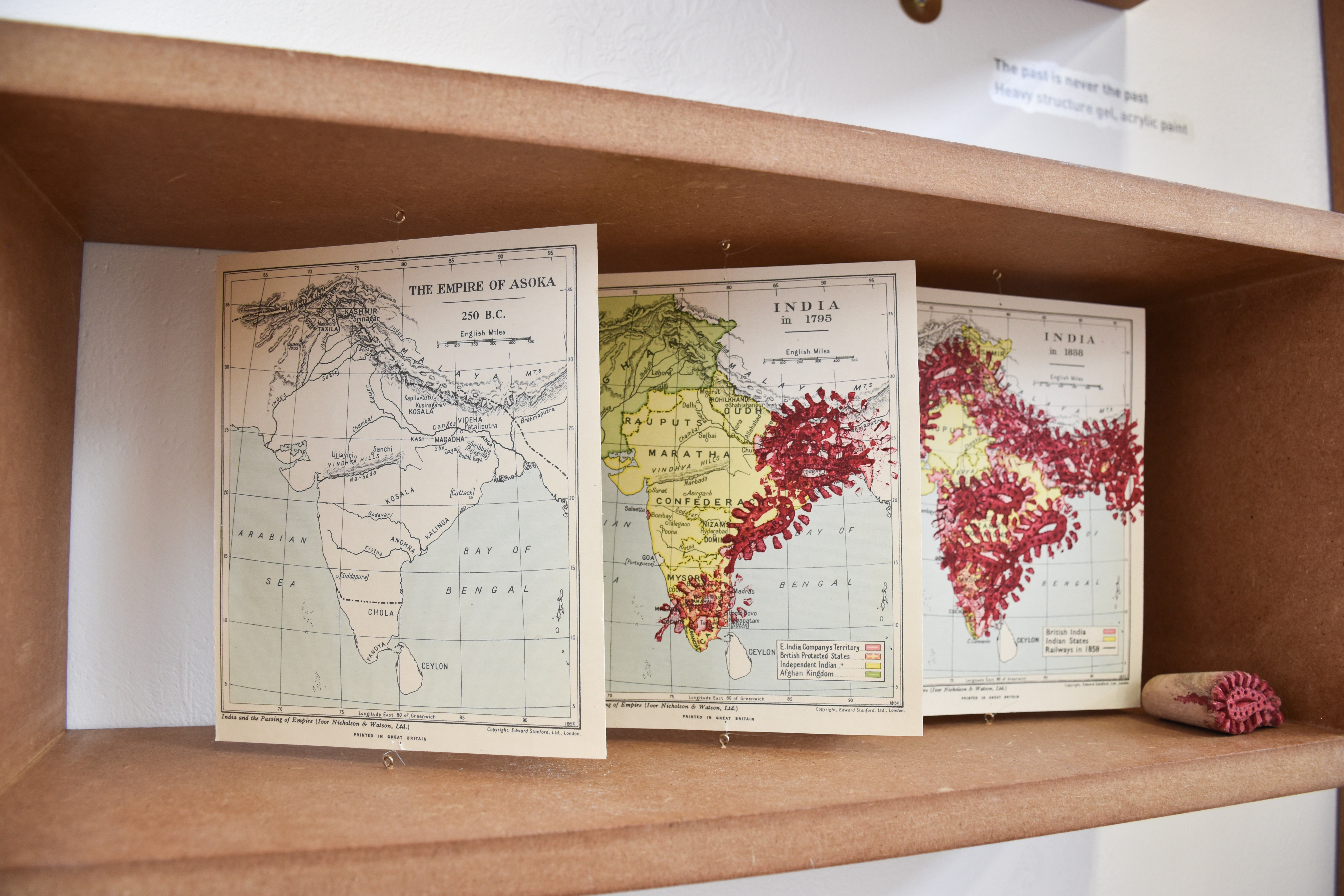
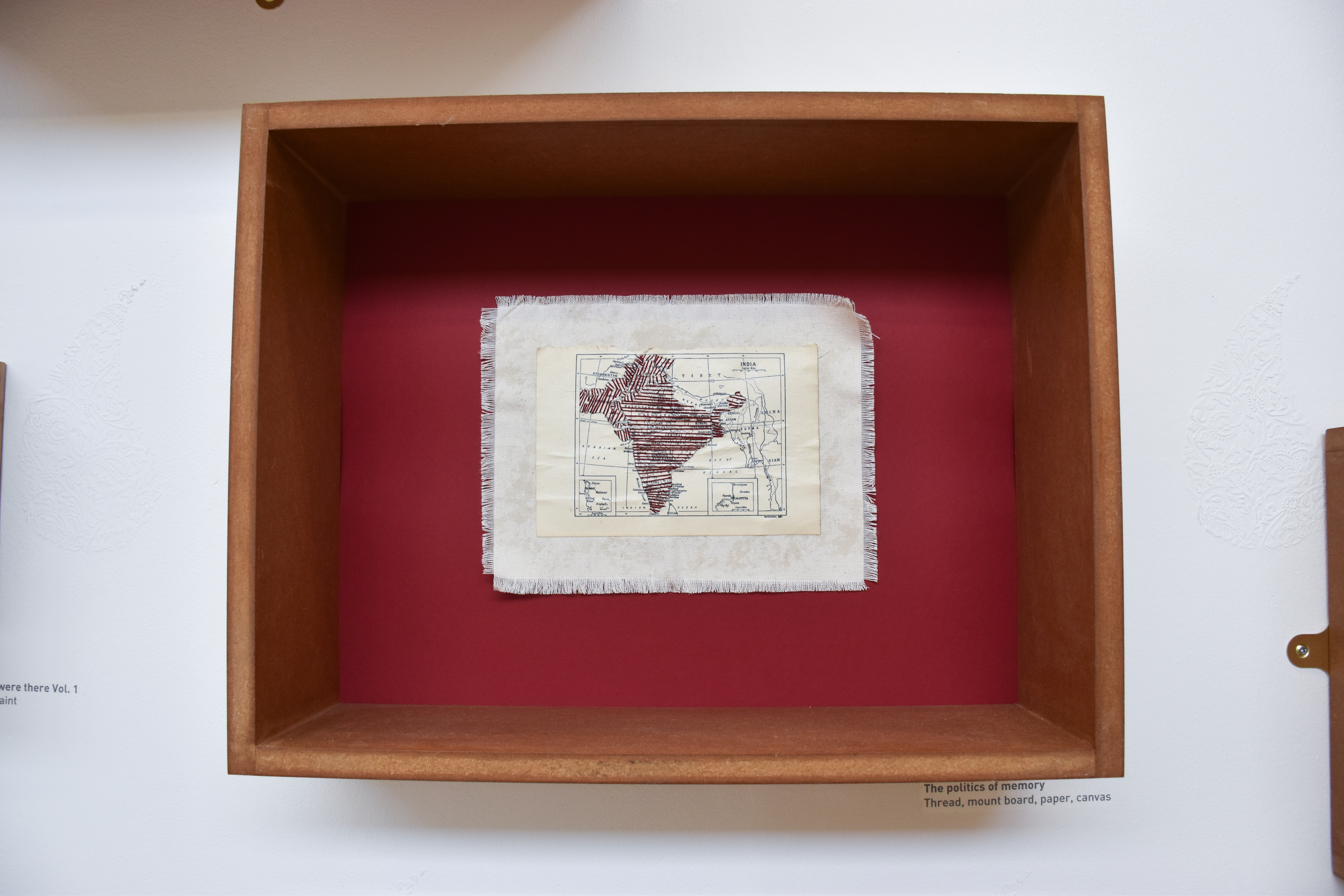
In 1941 The British Empire consisted of 84 territories/countries, one of these countries was British India. Room 84: The Paisley re-imagines the western museum space. Museums commonly glaze over the negative/painful history attached to Britain’s imperial past. Room 84 uses historical books and the Paisley pattern to unify the past and the present as well as cementing and remembering a forgotten history.
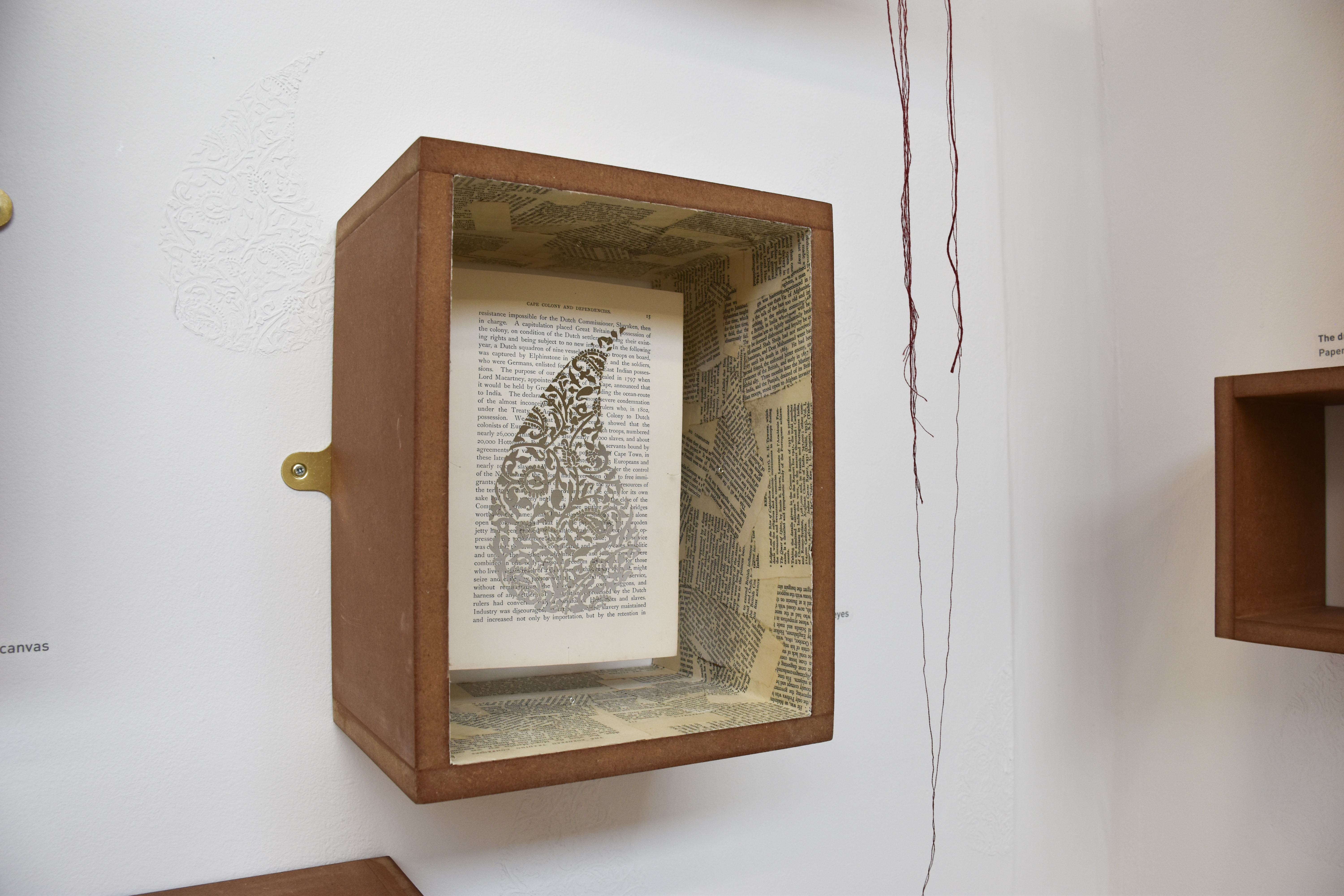
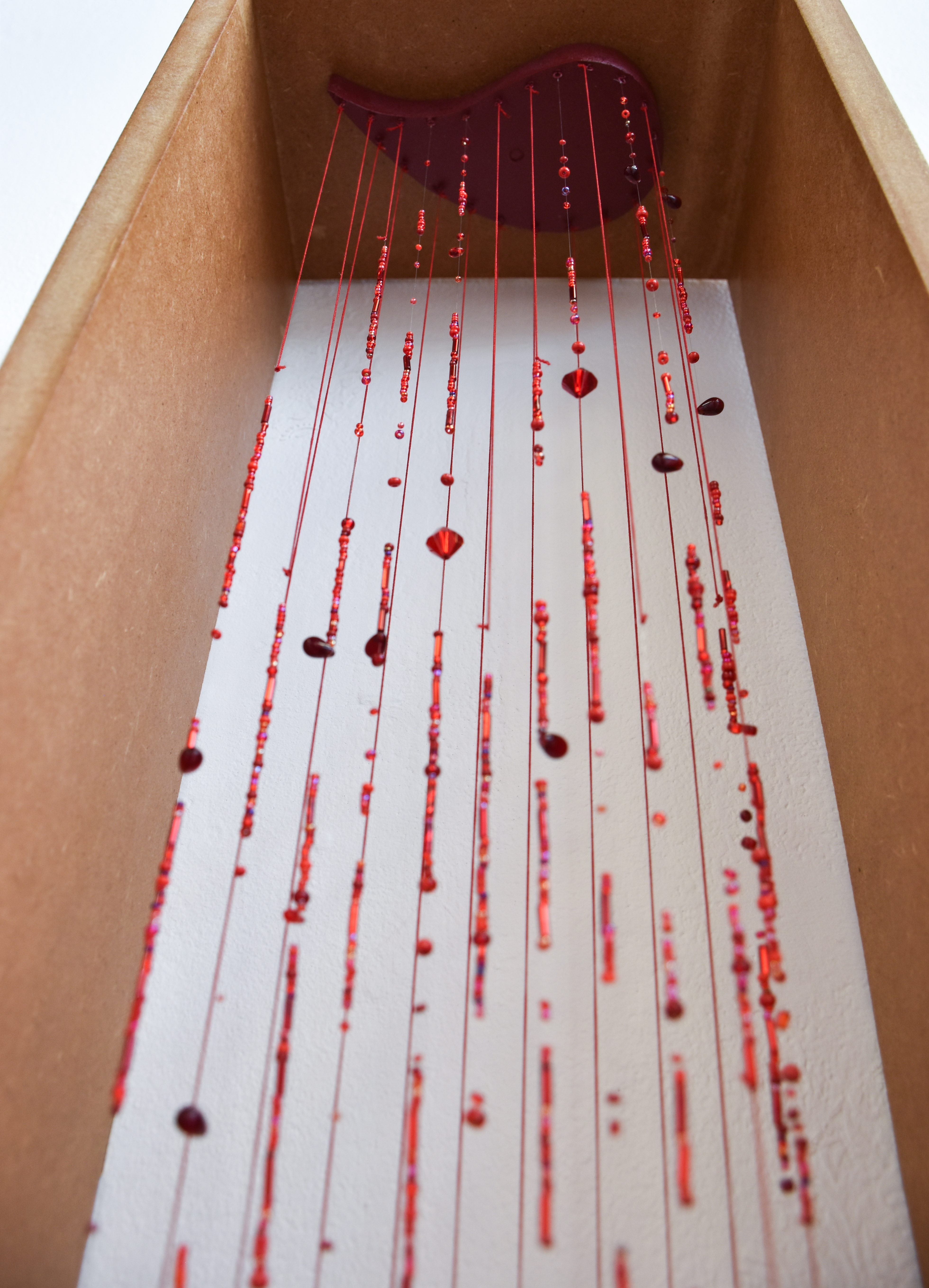
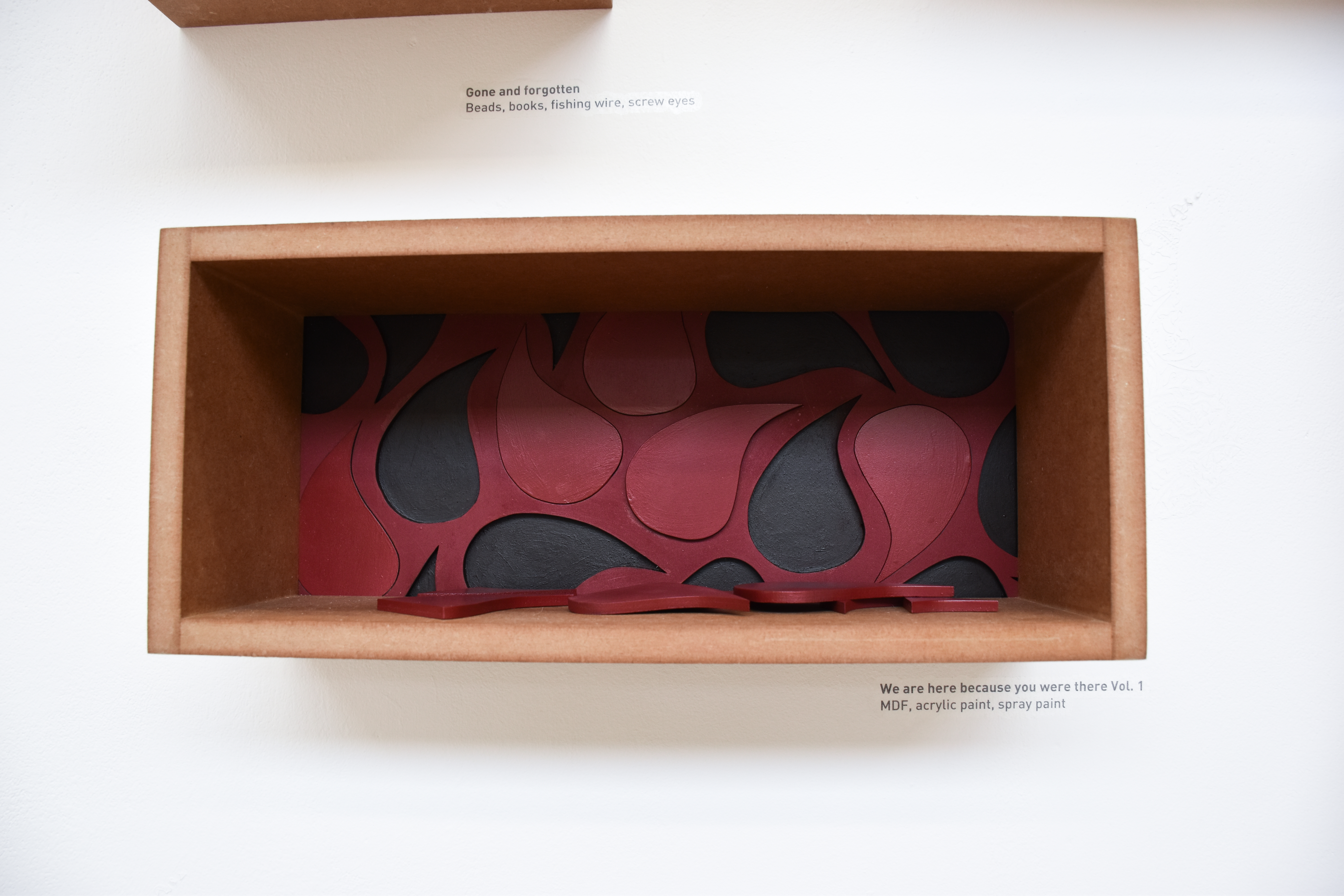
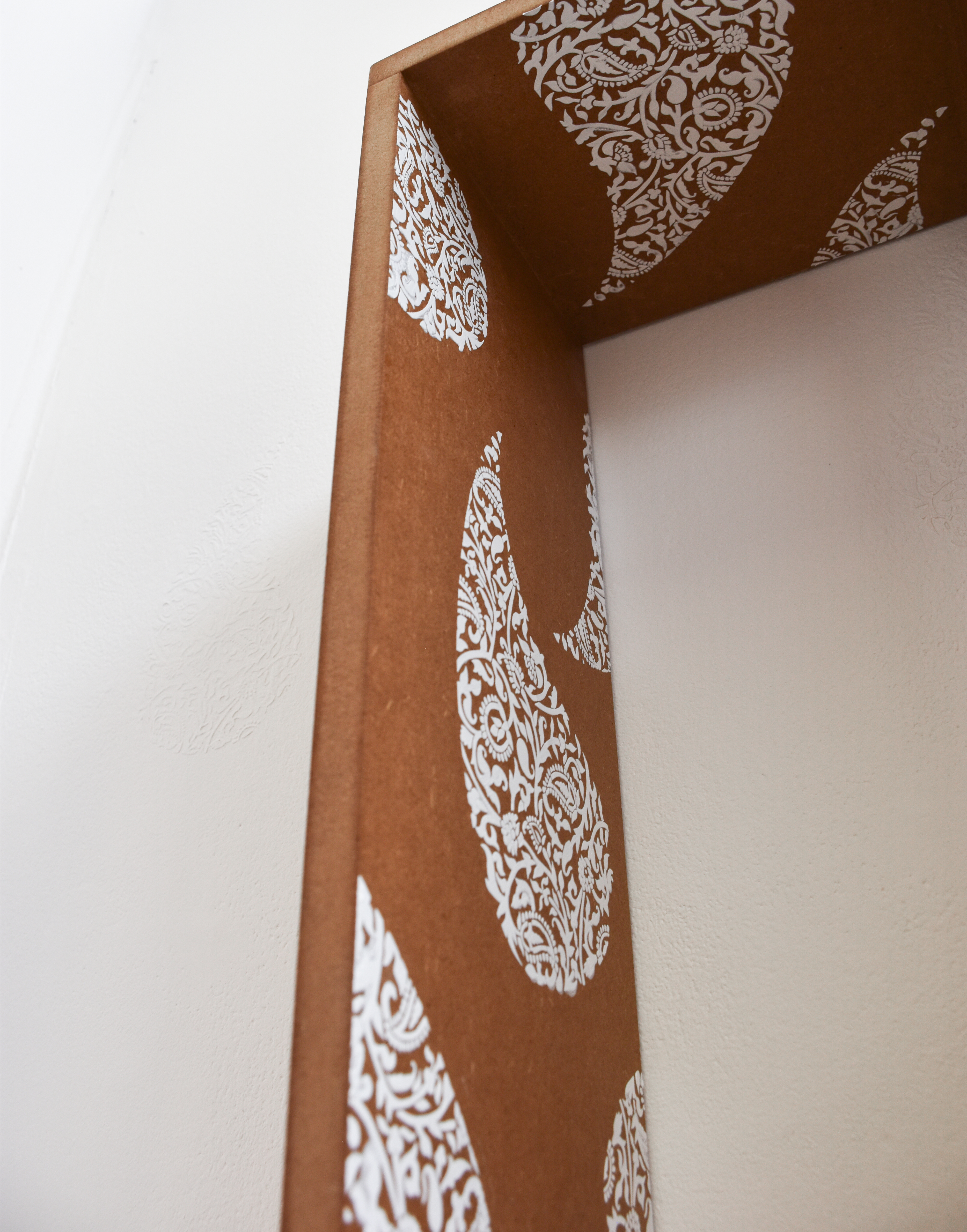
Throughout the space, modern iterations of the Paisley pattern are repeated in the objects within the cabinets and onto the walls. I have used the Paisley symbol and the history attached to the design to remember and acknowledge the past.
The Paisley pattern has a ‘hidden but powerful association with the British Empire’, Paisley shawls were brought to Britain through the ‘imports from the East India Company’ (Choudhury, n.d.) and became popular throughout Europe and was later mass produced and appropriated.
The traditional Kashmir Paisley shawl could ‘no longer compete’ with mass production in Europe leading to the ‘collapse of the industry’ in Kashmir, as a result ‘weavers were condemned to destitution and starvation’ (Gillow & Bernard, 2005, p.117).
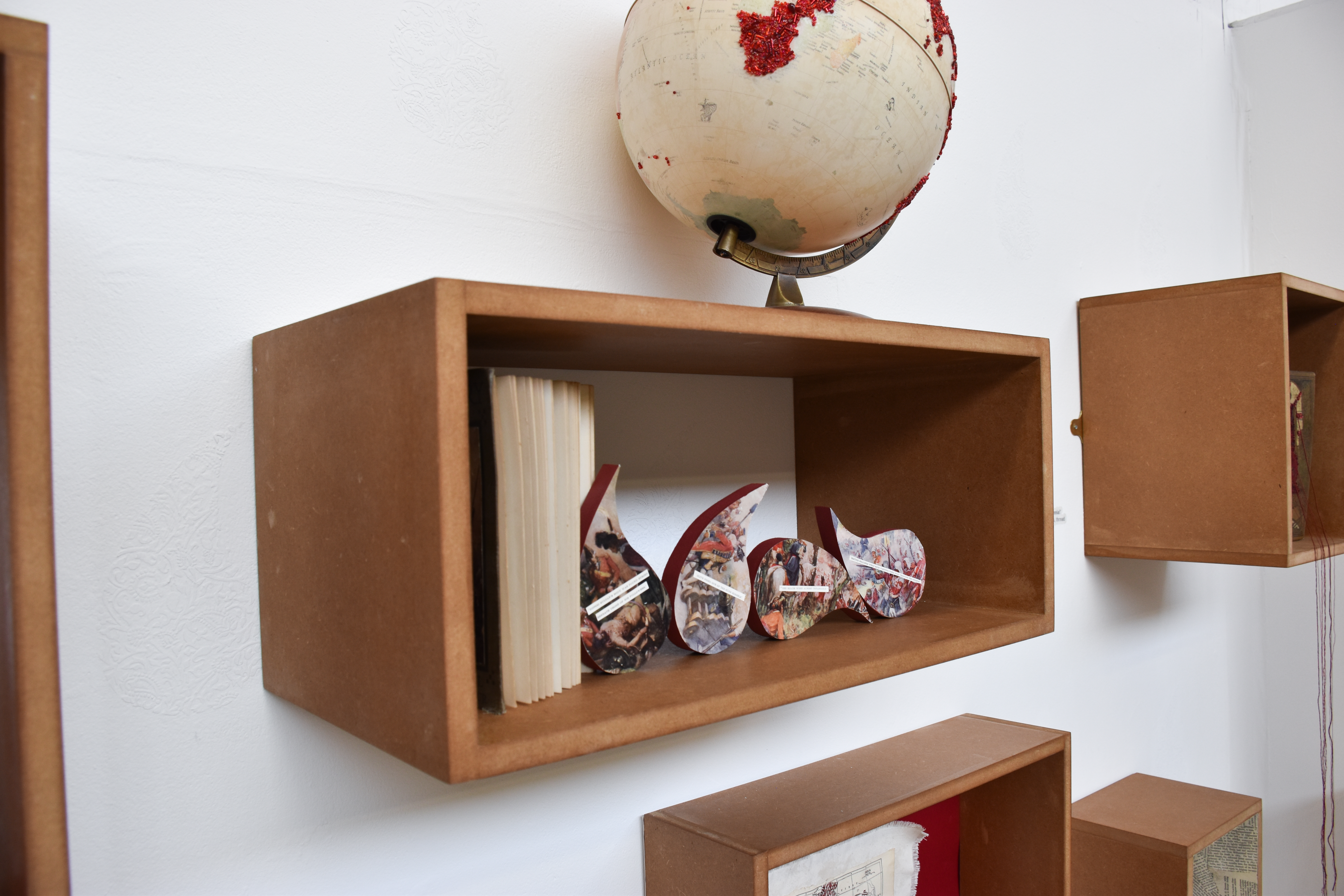
Room 84 address this history through the simplification of the shape. The decadent and colourful design has been re-constructed to a basic shape nearly unrecognisable to viewers.
This represents the dilution/simplification of history around The British Empire.
Institutional critique, in particular critique of Western Museum spaces, has guided this body of work. Western museums, especially British museums, were once symbols of colonial expansion and were used to promote Britain’s economical and geographical power.
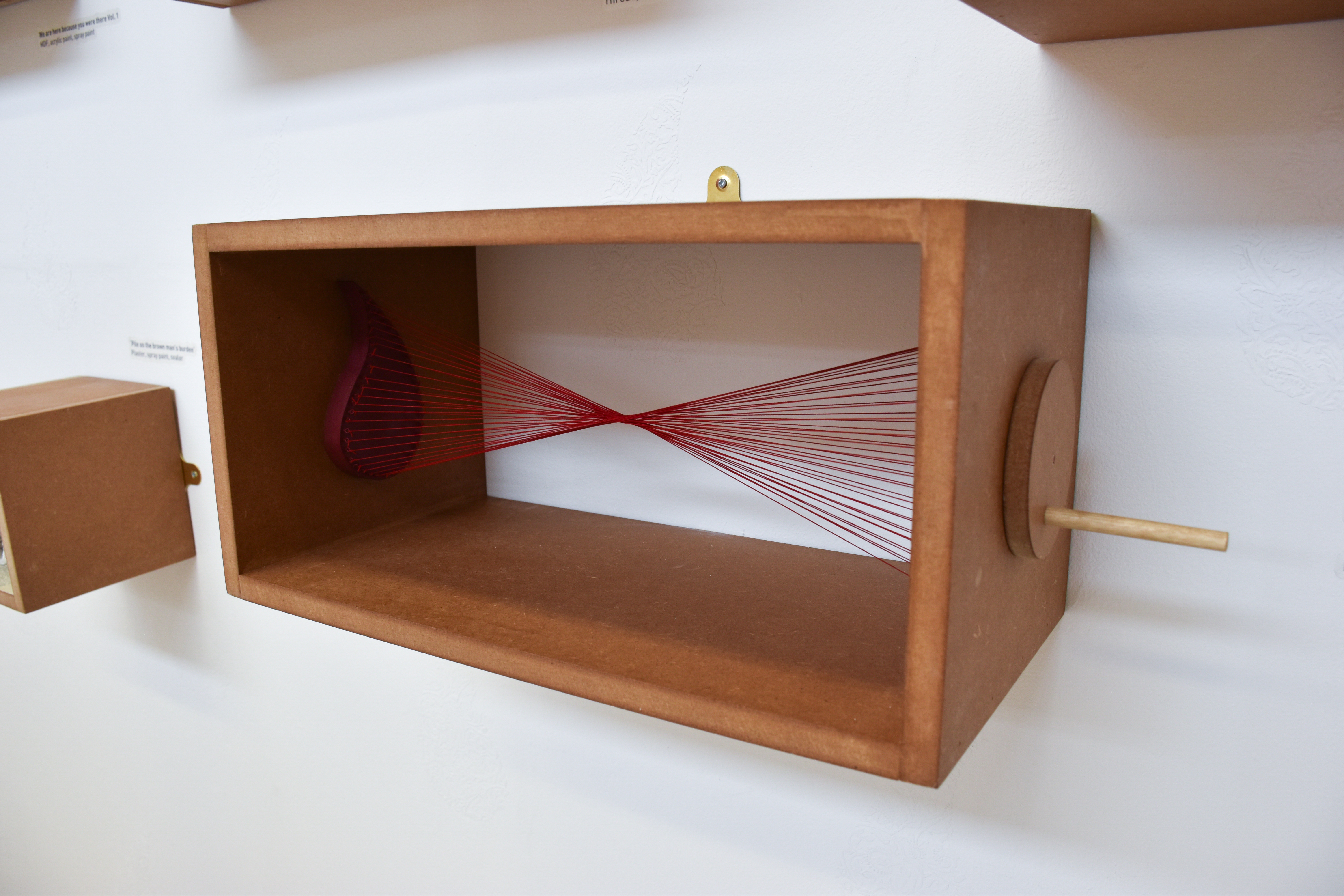
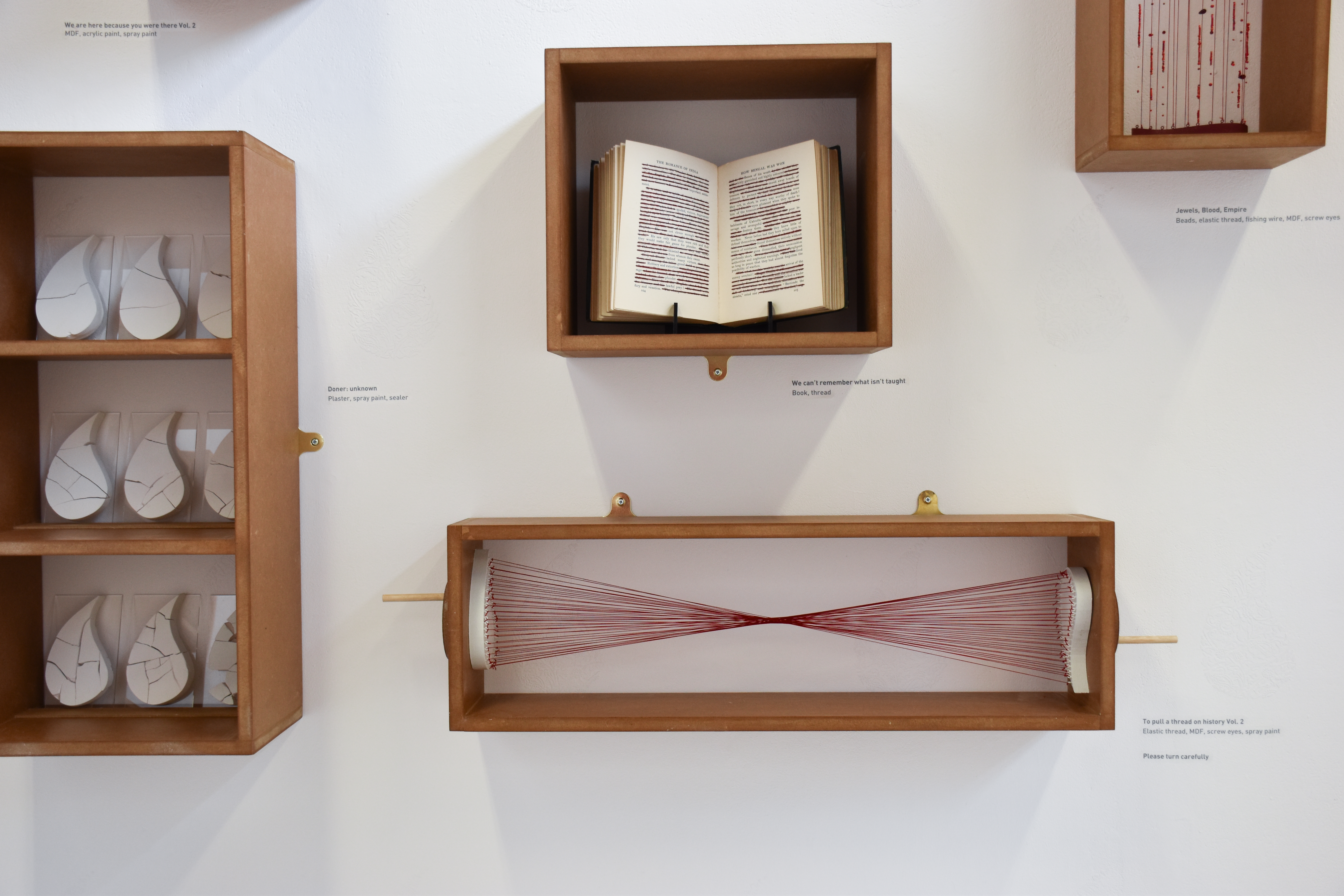
Although museums are no longer overtly used to promote Britain’s colonial conquests, the same power structures are embedded in displays and descriptions of artefacts. Room 84 re-imagines the Western Museum by revealing the darker side to colonial history – a side of history missing from museums – this is seen through the gallery wall box displays that the audience can interact with and touch for example, To pull a thread on history vol.1 & vol.2 incorporates manually turning Paisleys.
The art pieces are open and not behind glass, like typical museum displays. The lack of physical barriers allow audiences to immerse themselves in the work. This involvement is also encouraged through the visual nature of Room 84 as the art pieces do not overtly point to its meaning, this subtlety is important to my work as I want audiences to be guided by the title of the work and the visual imagery, allowing viewers to actively acknowledge and learn the history the pieces unveil.
Size:
495 x 300 cm
Medium(s):
MDF, plaster, thread, elastic, paper, books, beads, globe
Price:
price upon request
 Amina Pagliari